Serving Palo Alto, CA and surrounding areas. (650) 509-3392
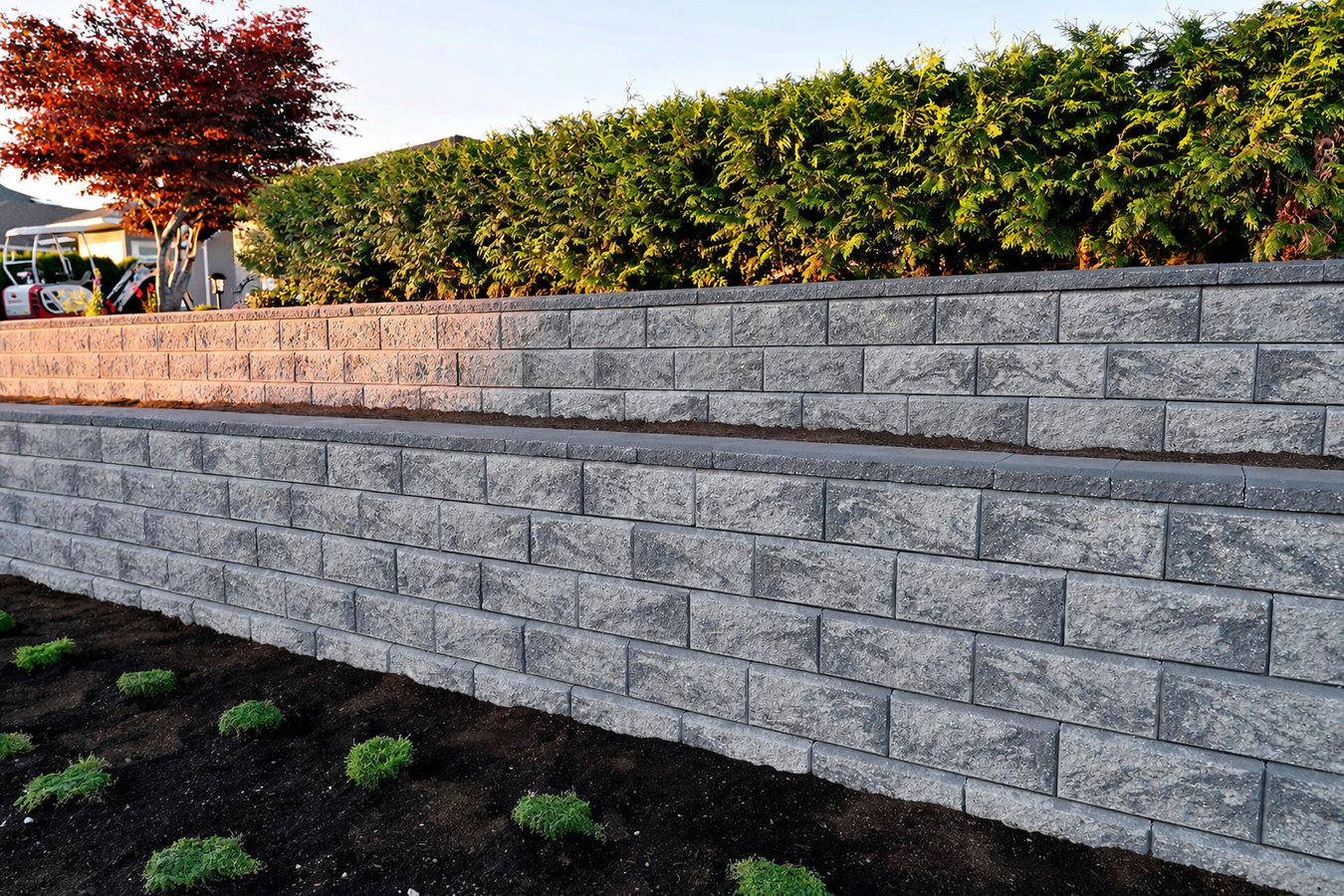
Soil sliding downhill, an older wall starting to lean, or a sloped yard you cannot use - we build retaining walls designed for Palo Alto's clay soils, wet winters, and seismic zone requirements.
Retaining wall construction in Palo Alto means excavating and preparing a compacted base, building the wall in courses with proper drainage behind it, and - for walls over four feet - coordinating engineering review and permits with the City of Palo Alto; most residential walls are built in one to three days once permits are approved and the crew is on-site.
Most homeowners contact us because something is already going wrong - soil washing downhill after rain, an older wall leaning forward, or water pooling against the house. The underlying cause is almost always drainage that was either never installed or has failed over time. We fix that at the design level, not just the surface. For properties where the wall is part of a larger hardscape plan, our masonry restoration team can address connected structures at the same time.
Retaining walls are one of the more regulated projects you can do on a Palo Alto property. The permit process is real, engineering is required for taller walls, and seismic design standards are stricter here than in most states. We have been navigating that process for homeowners across the Peninsula for years, and we handle all of it so you do not have to.
If you notice soil creeping downhill after a rainstorm - small ridges of dirt at the base of a slope, or bare patches where plants used to grow - that slope is not stable. In Palo Alto's wet season between November and April, this erosion gets worse each year and can eventually undermine a patio, fence, or structure above it.
A wall that has started to tilt forward, developed cracks along its face, or shows sections pushing outward is telling you the drainage or structural support behind it has failed. This is especially common in Palo Alto with older walls built before modern drainage standards. A leaning wall will eventually fall, and the damage it causes is far more expensive than replacing it proactively.
If rainwater consistently collects near your home's foundation rather than draining away, a graded retaining wall system may be part of the solution. Palo Alto's clay soils do not absorb water quickly, so water that has nowhere to go tends to sit - and sitting water against a foundation causes long-term structural damage.
Many Palo Alto homeowners with hillside or terraced lots want to create flat space for a patio, garden, or ADU. The only way to do that on a slope is to cut into the hillside and hold the soil back - which requires a retaining wall. If you have been looking at your sloped backyard and wishing you could use it, a retaining wall is the first step.
We build retaining walls in concrete block, natural stone, and poured concrete for residential properties across Palo Alto and the Peninsula. Every project includes proper drainage - gravel backfill and a perforated pipe at the base - because a wall without drainage is a wall that will fail. We coordinate engineering review and City of Palo Alto permits for any wall that requires them, and we call 811 to locate utilities before any excavation begins. For homeowners who also need structural block walls on their property, our concrete block walls team handles freestanding and boundary applications alongside retaining work.
We provide written proposals that cover the full scope: excavation, base preparation, wall construction, drainage installation, and site cleanup. No scope creep, no surprise line items. You know the full cost before work begins, and you know exactly what the finished wall will include.
Suits homeowners who need a cost-effective, durable wall that can be built tall with geogrid reinforcement and is compatible with Palo Alto's permit process.
Suits homeowners who want a wall that blends into a landscaped garden setting and are willing to invest in a premium material with a long lifespan.
Suits homeowners with very tall walls or complex engineered designs where a monolithic concrete structure is the specified solution.
Suits homeowners with an existing wall that is leaning, cracking, or failing - whether it needs targeted repair or a full rebuild with modern drainage.
Palo Alto sits on clay-heavy soils that swell when wet and shrink when dry. That seasonal movement puts more stress on retaining walls here than in areas with stable sandy soils - and it is one of the main reasons older walls in this area fail faster than expected. The Foothills area and older hillside neighborhoods have significant grade changes that make retaining walls a practical necessity on many lots, not just a cosmetic choice. We serve customers across the Peninsula, including in San Mateo and Menlo Park, where similar soil and slope conditions apply.
Palo Alto also sits in one of the most seismically active regions in the country, which means every wall we build here is engineered to handle lateral earthquake forces, not just the weight of the soil. The City of Palo Alto requires engineering review for taller walls, and that requirement exists for a real reason. We work with licensed structural engineers on every project that needs it and coordinate the full permit process through the City of Palo Alto Building Division. The USDA Natural Resources Conservation Service provides guidance on slope stabilization and soil conservation that informs how we approach drainage design on hillside properties.
We come to your property, assess the slope, soil conditions, and drainage patterns, and tell you upfront whether your wall will need engineering and permits. We reply within one business day and never give ballpark figures over the phone.
You receive a written proposal covering excavation, wall construction, drainage, and cleanup. If your project requires a permit, we handle the application and engineering coordination - you do not navigate city hall on your own.
Once permits are approved, the crew marks the work area, calls 811 to locate underground utilities, and excavates to the correct depth. We prepare a level, compacted base before any wall material goes down - this step determines how long the wall holds.
We build the wall in courses, installing gravel backfill and a perforated drain pipe as we go. After construction, a city inspector signs off on permitted work. We check back after the first significant rain to confirm drainage is performing as expected.
We come to your property, walk the slope with you, and give you a written quote that includes drainage, permits, and engineering coordination - no obligation.
(650) 509-3392We design drainage into every wall from the start, not as an afterthought. Santa Clara Valley clay puts more pressure on walls than stable soils, and gravel backfill with a perforated pipe at the base is not optional - it is the difference between a wall that lasts and one that fails in ten years.
We coordinate engineering review and handle City of Palo Alto permit applications on your behalf. You do not spend time at the building department, and you are not left holding the bag if an inspector shows up. Permitted work also protects your property's value when you sell.
Every wall we build that requires engineering is reviewed for seismic loads, not just soil pressure. The Bay Area's seismic risk is real, and a wall designed only for static soil weight will behave very differently in an earthquake than one engineered for lateral forces.
We have been building retaining walls on sloped Palo Alto properties since 2016. We know which neighborhoods have the steepest grades, how the city's permit office processes structural wall applications, and what drainage solutions hold up through repeated wet seasons.
Every proof point above connects to one outcome: a wall that holds, drains correctly, and passes inspection without surprises. That is what we build, and it is why homeowners call us back for concrete block walls, masonry restoration, and other work on the same property.
Repair and restore aging masonry structures, including older retaining walls, walkways, and exterior stonework.
Learn MoreBuild freestanding concrete block walls for property boundaries, privacy screens, or structural enclosures.
Learn MoreSpring slots fill fast - contact us now to lock in your start date before the rainy season prep rush begins.