Serving Palo Alto, CA and surrounding areas. (650) 509-3392
Cracked, sunken, or heaving walkways are a common problem in Palo Alto. Clay soils, mature tree roots, and seasonal rain cycles are hard on paths that were not built with the right base. We fix that.
Walkway construction in Palo Alto means removing whatever is there now, preparing a stable compacted gravel base, and installing your chosen surface - concrete, brick, pavers, or natural stone - with a slope that drains water away from your home. Most residential jobs take one to three days on site, with additional cure time for concrete and mortar-set surfaces. City permits are required for most new paths that connect to a public sidewalk, adding one to three weeks to the timeline before work begins.
Homeowners in Palo Alto usually call us because an existing path has cracked, heaved near tree roots, or simply worn out after years of wet-dry soil cycling. Getting the base right is the whole job - a beautiful surface on a poor base will crack again within a few years. If you are also planning hardscape at the end of the walkway, our driveway pavers service can tie the two areas together with matching materials. And if a nearby retaining wall or border is crumbling at the same time, our brick wall installation team can address that as part of the same project.
If you have patched cracks before and they have reopened - or new ones appeared nearby - the problem is in the base, not the surface. Palo Alto's clay-heavy soil shifts enough each year to re-open any patch that does not address the root cause. Repeated patching is a sign it is time to replace the path.
Walk your path slowly and check whether any slabs have dropped or tilted to one side. Uneven surfaces are a trip hazard. In Palo Alto, mature tree roots running under older front paths are one of the most common causes of this kind of heaving and settling.
If puddles form on or near the walkway after winter rain, the surface no longer drains the way it should. Water sitting against your foundation or collecting near your entry can cause long-term damage. Palo Alto's rainy season makes this especially worth addressing before the rains arrive.
Some older Palo Alto properties have no clear walkway - just lawn, ground cover, or shifting stepping stones. If guests regularly cut across the grass or you step around plants to reach your door, a properly built path makes daily life easier and adds real value to the property.
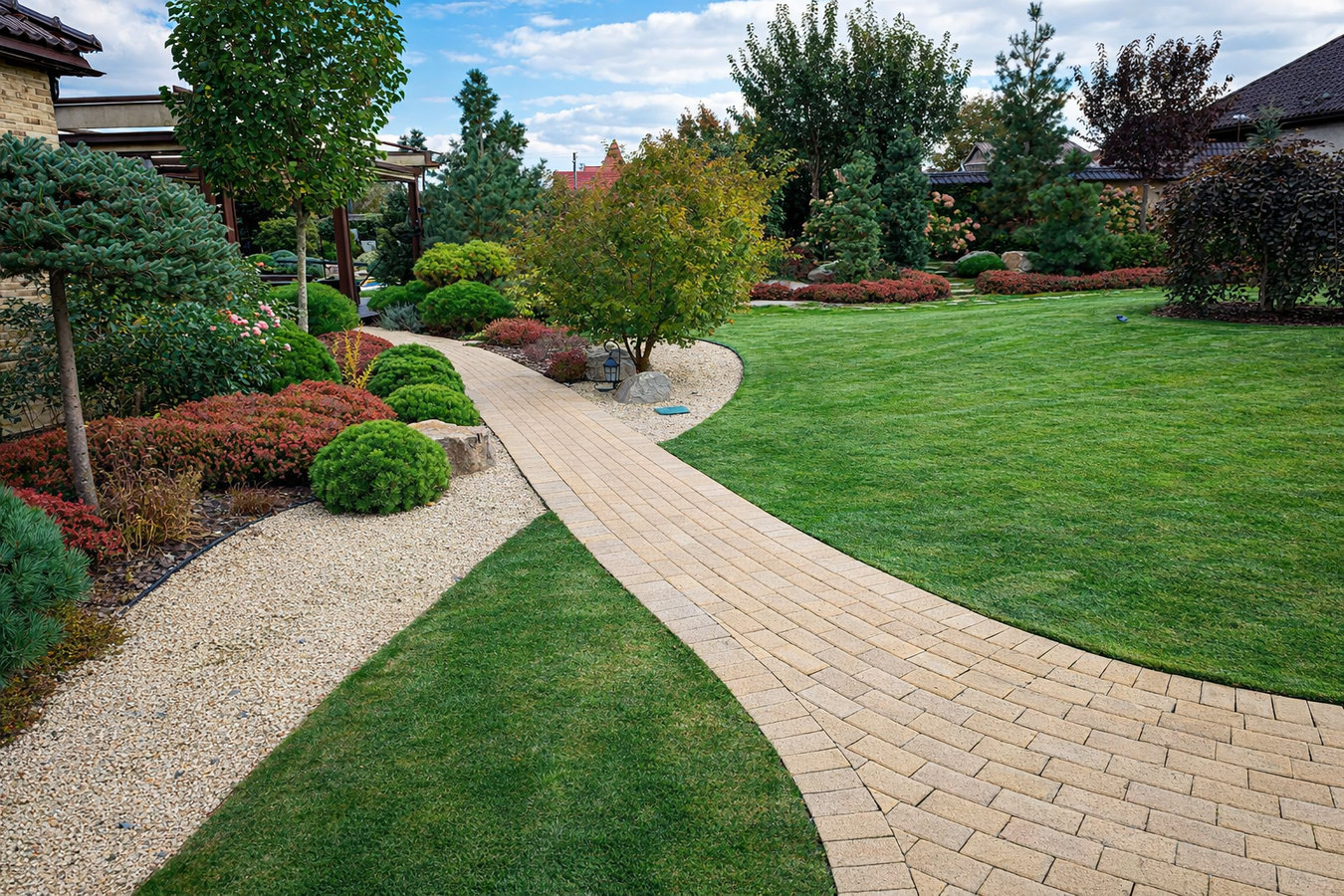
We build new walkways and replace failing ones throughout Palo Alto using poured concrete, brick, concrete pavers, and natural stone. Every project starts with demolition of the old surface if there is one, proper excavation, and a compacted gravel base sized for the soil conditions on your property. We build a drainage slope into every path - typically about one inch of drop for every four feet - so water moves toward the yard or street instead of sitting against your foundation. If your path runs near protected street trees, we assess root conditions before digging and work around significant roots where possible. Our driveway pavers service can extend the same material from your walkway into a matching driveway surface, and our brick wall installation team can add a boundary wall or border edging along the path for a finished look.
We apply for the City of Palo Alto building permit, manage the review process, and handle the final inspection sign-off. Permit documentation is included when the job is complete. If your property falls under HOA design guidelines - common in newer developments around Palo Alto - we flag that early and build the approval timeline into the schedule.
Best for homeowners who want a durable, low-maintenance path at the most affordable price point.
Well suited for properties with clay soil or tree roots - individual pavers can be lifted and reset if the ground shifts, without replacing the whole path.
A natural fit for older craftsman and colonial-style homes in Palo Alto neighborhoods where traditional materials complement the architecture.
Ideal for homeowners who want a distinctive look - flagstone, bluestone, or slate set correctly can outlast the house itself.
Most walkway failures in Palo Alto come down to two things: clay soils and tree roots. Much of the city sits on bay mud and clay-heavy ground that swells when wet and contracts when dry. That seasonal movement is relentless, and a base that works fine in a drier climate often is not enough here. A mason who knows the area will dig deeper, compact more aggressively, and may recommend a thicker base layer than you would need elsewhere. Palo Alto also averages about 15 inches of rain per year, nearly all of it between November and April - so drainage slope is not optional. Timing your project for the dry season gives concrete and mortar the best conditions to cure before the first winter rains. Homeowners in Sunnyvale and Mountain View face similar clay soil conditions, and we handle walkway projects throughout both cities.
Palo Alto's older neighborhoods - Crescent Park, Old Palo Alto, Professorville - have the densest tree canopy in the city, and mature street trees with deep root systems running under front paths are one of the most common reasons homeowners call us. The city has rules about root disturbance near protected street trees, and a contractor who ignores those roots will likely see the same heaving return within a few years. We assess root conditions before any digging starts. The Interlocking Concrete Pavement Institute publishes installation guidelines that inform how we approach base preparation and jointing on every paver project we build.
When you reach out, we ask a few quick questions - roughly how long the path is, what material you are thinking about, and whether there is an existing surface to remove. We reply within one business day and schedule a free on-site visit, because it is hard to give an accurate number without seeing the yard.
We walk the path with you, measure the area, and look at soil, drainage, and any tree roots near the surface. We note whether a city permit is required for your scope of work. You receive a written proposal that breaks down labor and materials - not a single lump-sum number.
If a permit is required - which it often is in Palo Alto for paths connecting to the public sidewalk - we submit the application on your behalf. Permit approval typically adds one to three weeks. Once approved, we confirm your start date and let you know what to clear from the path area.
We remove the old surface, excavate, and compact the gravel base - the step that determines how long the new path lasts. Then we install your chosen material. After the surface is complete, we clean up, haul away debris, and walk the finished path with you before we leave.
Free on-site estimate. Written quote. Permits handled for you.
(650) 509-3392Palo Alto's clay-heavy ground requires deeper excavation and more aggressive compaction than what works in drier climates. We size the gravel base to match your actual soil conditions, not a national average. That base preparation is why our paths stay level when others start shifting.
We apply for the City of Palo Alto building permit, communicate with the building department, and schedule the final inspection. You receive permit documentation when the job is complete. This protects you legally and ensures your project will not cause issues if you sell your home.
We check for protected street trees and root conditions before we excavate anything. The city has rules about root disturbance near street trees, and contractors who ignore those rules see the same heaving return within a few years. We work around significant roots where possible and design the path to give them room.
Every proposal we give breaks down labor and materials separately so you can compare it fairly against other quotes. We also tell you honestly whether repair or replacement makes more sense for your specific situation - even if that means a smaller job for us.
Every walkway we build is backed by local knowledge of Palo Alto soil conditions, permit requirements, and tree protection rules. When you call us, you get a contractor who has worked on these specific challenges before - not someone applying a generic process to a local problem.
Add a permanent brick border wall or boundary alongside your new walkway.
Learn MoreExtend the same paver material from your walkway into a matching driveway surface.
Learn MoreSpring booking slots fill fast - reach out now to lock in your start date before the season gets away from you.